
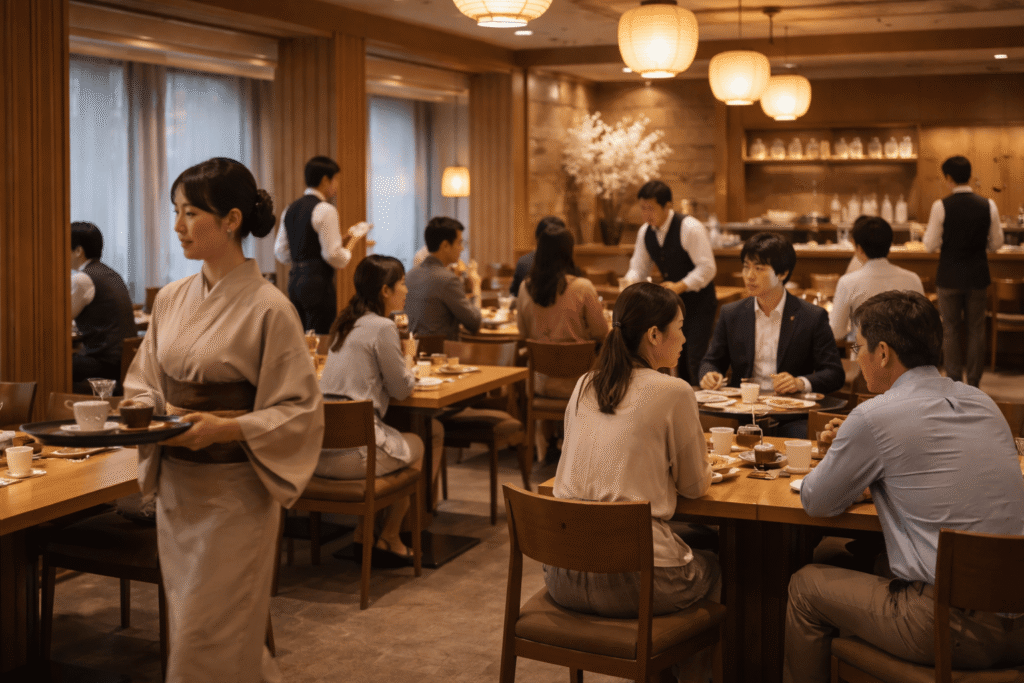
Even in busy restaurants, stations, and hotels, Japan often feels naturally tip-free. This article explains why that feeling remains consistent, focusing on clear payment culture, shared expectations, and low-friction service.
Watch the video: Why Japan Feels “Tip-Free” (Even in Busy Places)
One reason tipping feels normal in some countries is that busy service often makes the system feel more personal, improvised, or socially negotiated.
Japan often feels different.
Even in places that are crowded, fast-moving, or highly active, the atmosphere can still feel naturally tip-free.
So why does Japan feel this way, even in busy places?
The answer usually comes from structure. Payment feels complete. Roles feel clear. And even when a place is active, the overall flow still feels organized rather than socially improvised.
The payment structure feels complete from the start
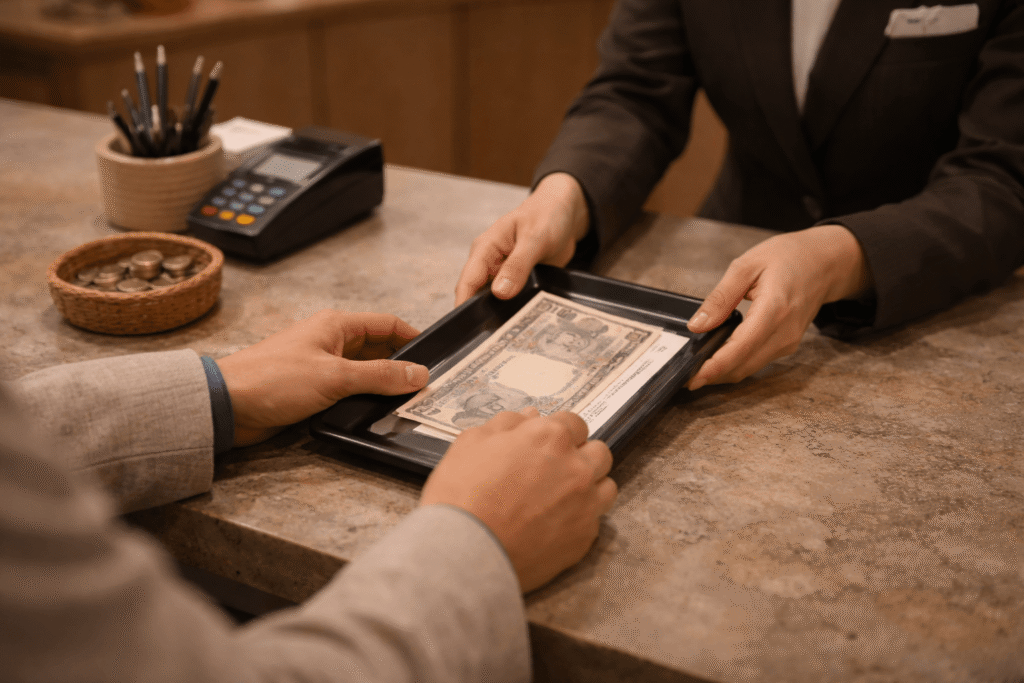
In many Japanese settings, the amount you pay is expected to be the final amount.
That may sound simple, but it shapes the whole feeling of the experience. The transaction feels finished inside the bill itself. There is no strong cultural expectation that something social still needs to happen after the payment.
Because of that, even in busy places, the system does not leave much emotional space for tipping.
It feels complete already.
Busy does not automatically mean socially noisy
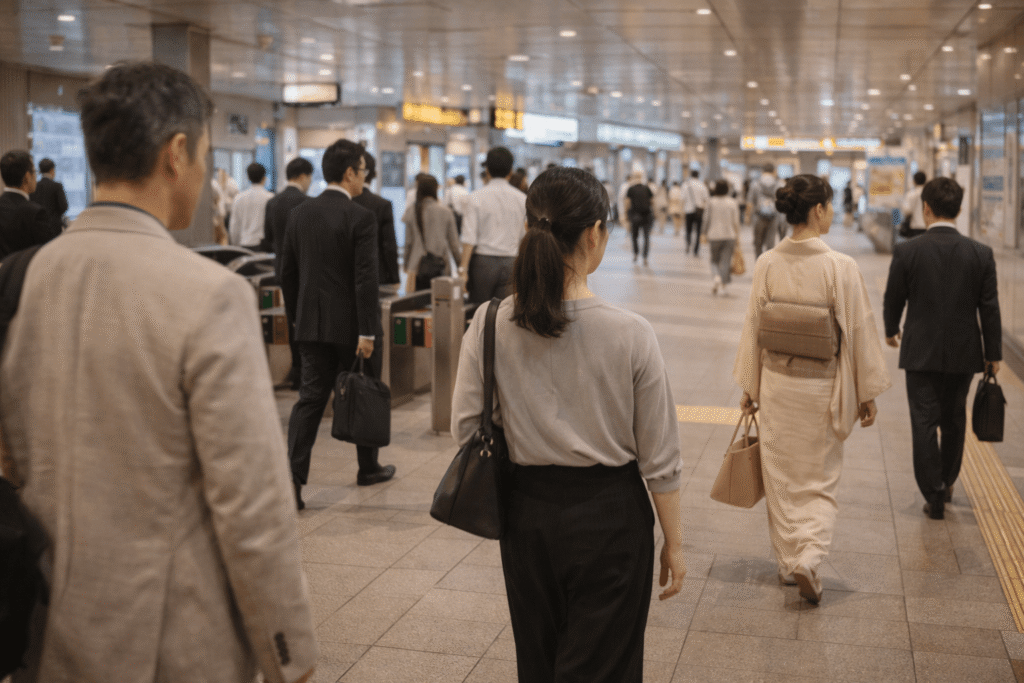
In some countries, busy service environments can feel lively in a way that makes tipping feel natural. There may be more improvisation, more expressive interaction, or more visible personal effort.
In Japan, busy does not always work that way.
A place can be full, fast, and active while still feeling orderly. Staff may move quickly, but the atmosphere often stays controlled. Customers may be numerous, but public behavior usually remains restrained.
That makes the whole environment feel less like a space where extra social payment is expected.
Shared expectations reduce friction
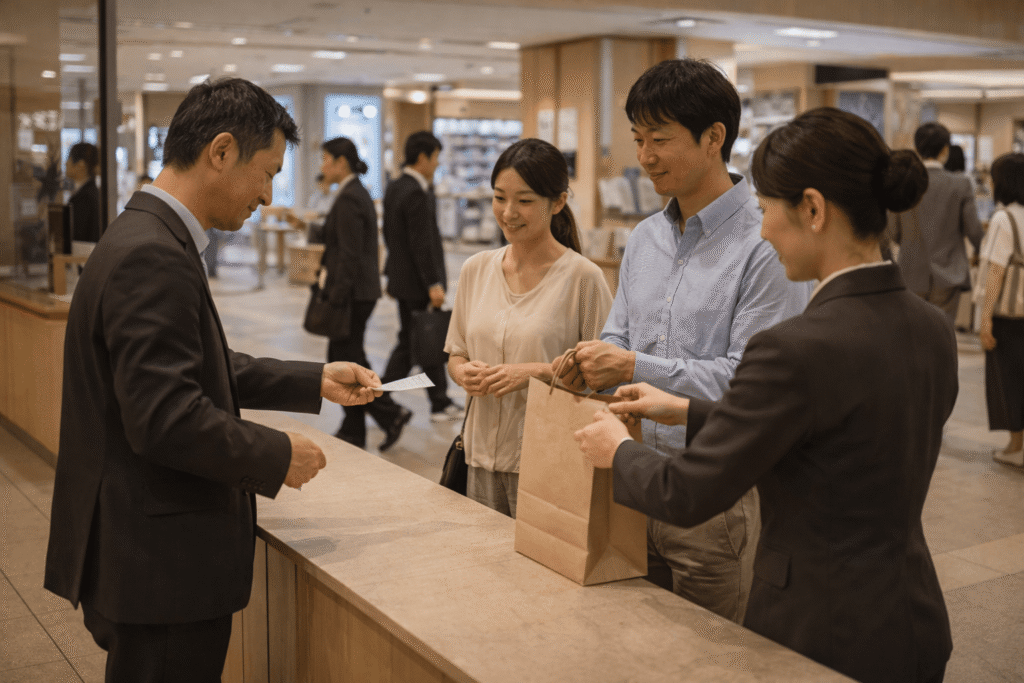
Another reason Japan feels tip-free is that both sides are often working from similar assumptions.
Customers are not usually wondering how much to add. Staff are not usually expecting extra reward. The roles are already socially settled.
That reduces small moments of friction.
There is less hesitation, less calculation, and less social uncertainty around the end of the interaction.
Smooth systems leave less room for tipping
This is why “tip-free” in Japan often feels natural rather than strict.
People are not necessarily thinking about tipping and rejecting it every moment. Instead, the system itself leaves less room for the idea to appear in the first place.
When the service feels complete, the payment feels clear, and the relationship feels settled, tipping simply feels less relevant.
Final thoughts
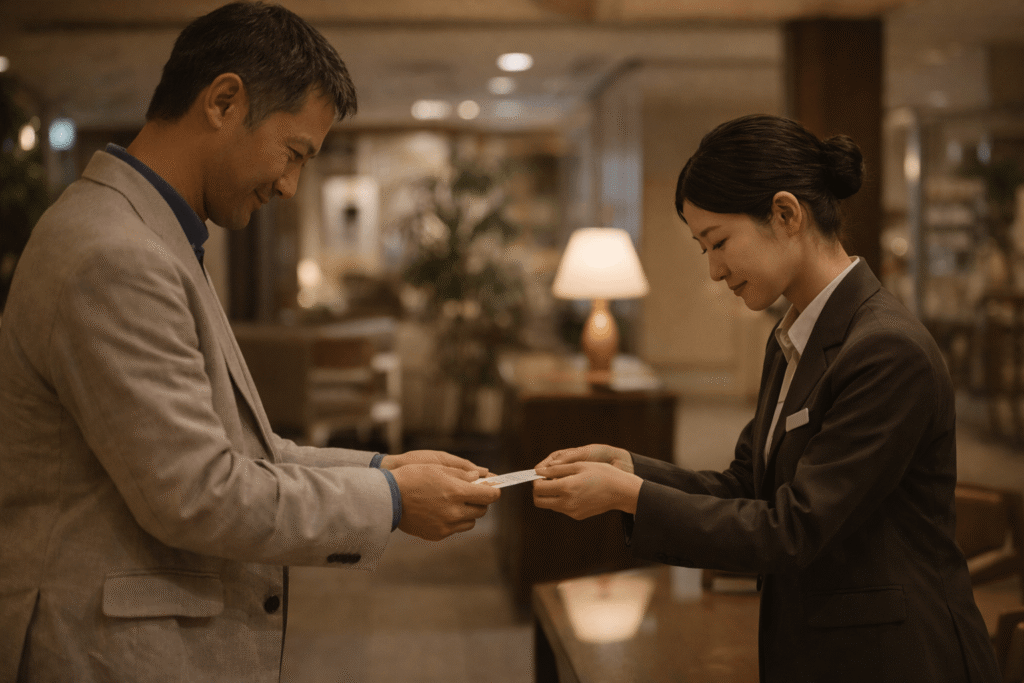
Japan feels tip-free, even in busy places, because the system remains organized even under pressure.
The bill feels complete. The roles stay clear. The atmosphere does not become socially chaotic just because a place is active.
That is why tipping in Japan often feels absent not as a rule being enforced, but as something the situation never really asks for.