
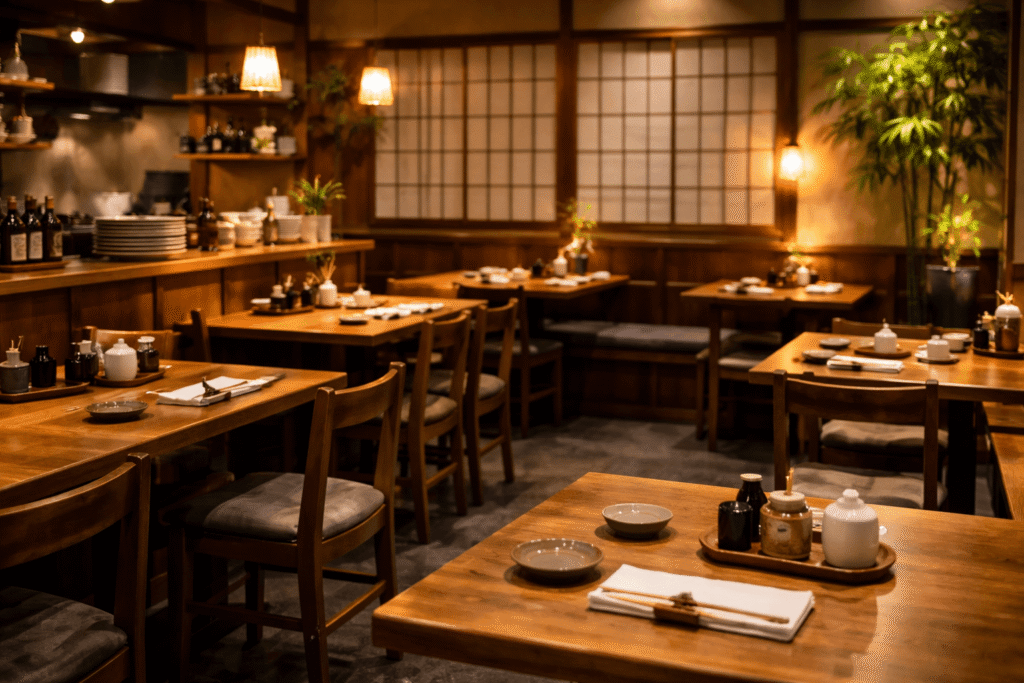
Many visitors say the same thing after eating in Japan: the experience feels smooth.
Food arrives naturally. Staff seem attentive without interrupting too much. Payment feels clear. Even busy restaurants can feel surprisingly calm.
So why do Japan’s restaurants feel so smooth?
The answer is not just speed. It is the combination of quiet service, clear roles, and shared expectations between staff and customers.
Watch the video: Why Japan’s Restaurants Feel So “Smooth”
Everyone understands the flow
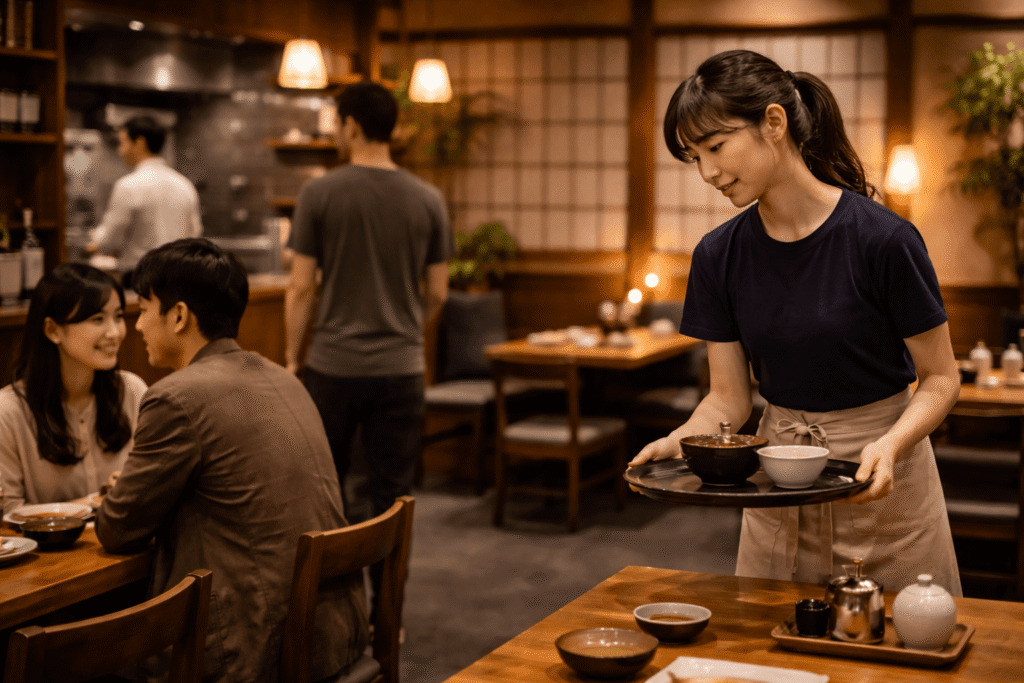
One reason Japanese restaurants feel smooth is that the flow of the meal often feels easy to read.
You are seated. Water arrives. Orders are taken. Food comes in a calm rhythm. Payment is handled in a predictable way.
Even when there is no dramatic friendliness, the process often feels comfortable because it is easy to understand.
Visitors may not always notice each step consciously, but they feel the result: less friction.
The service is quiet, but highly organized
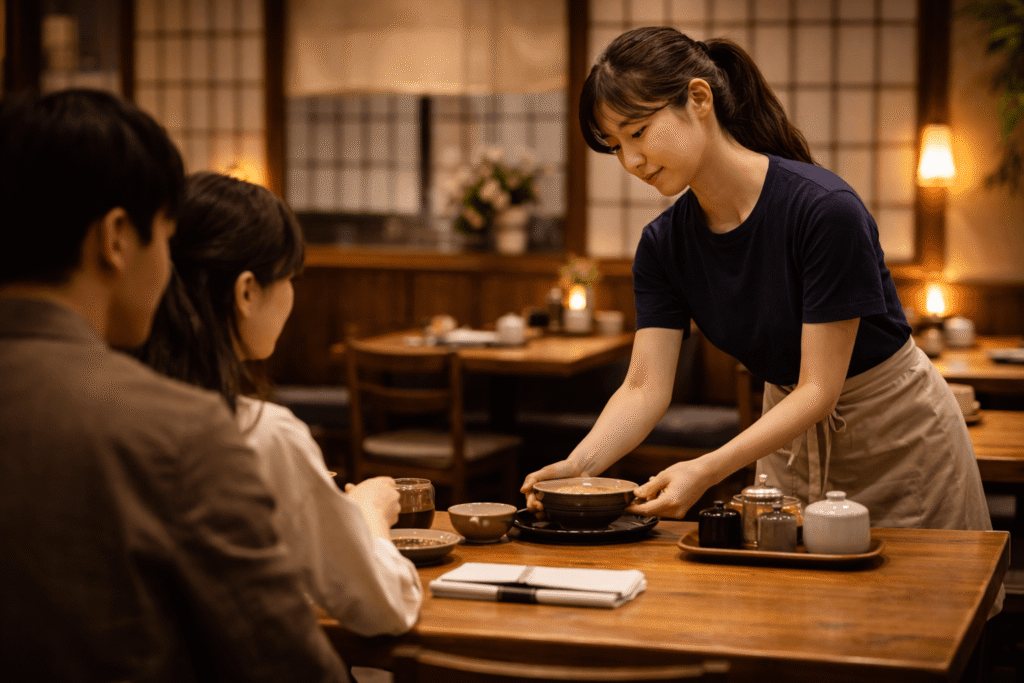
Another reason is that the service style is often low-pressure.
Staff usually do not try to create constant conversation. They do not need to perform warmth in an exaggerated way. Instead, they often focus on timing, attention, and efficiency.
That can make the whole experience feel lighter.
The restaurant works well not because it is loud or expressive, but because it is organized.
Customers are also part of the smoothness
This is important.
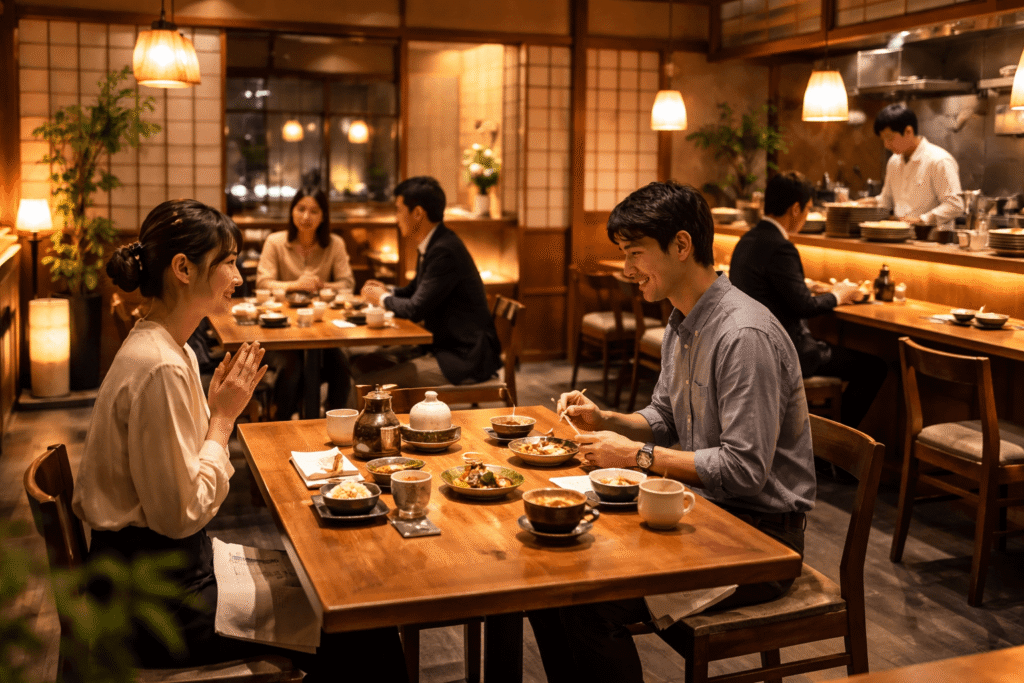
Restaurants in Japan often feel smooth not only because staff are skilled, but because customers also behave in ways that support the same atmosphere.
People usually speak at a moderate volume. They do not demand constant attention. The shared space is treated with a certain level of restraint.
Because both sides are following similar expectations, the interaction feels easier.
The system reduces small moments of tension
Smoothness also comes from the absence of certain small stresses.
You are less likely to wonder how much to tip. You are less likely to negotiate over service style. The roles are usually clearer.
That does not mean every restaurant is perfect. But it helps explain why even simple dining experiences can feel unusually polished.
Final thoughts
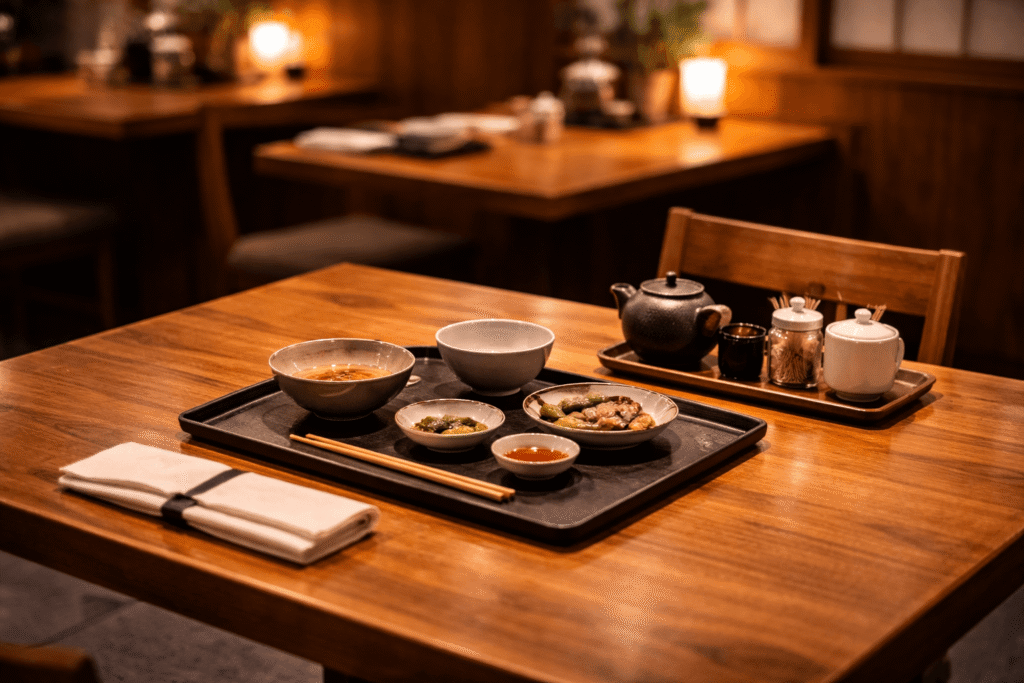
Japan’s restaurants often feel smooth because service is organized, roles are clear, and customers and staff are often working within the same quiet expectations.
The result is not dramatic hospitality.
It is something more subtle:
a dining experience with less friction, less confusion, and more calm.
If Japanese restaurants feel smooth because everyone shares the same expectations, the next question becomes even more interesting: what is the “best tip” in Japan, if money is not the answer?